
Chip And Dale Rescue Rangers story
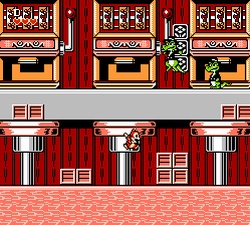
The tale of Chip ’n Dale: Rescue Rangers is that moment when Capcom’s logo flashed beside Disney’s ears and the whole crowd instantly knew: this is the one. The cartoon already lived in our heads and on VHS, and in 1990 it jumped onto a cartridge: Chip ’n Dale Rescue Rangers—“Chip & Dale” for short—the name we gave both the game and that daredevil chipmunk duo. Nothing phoned in here: not “random critters,” but the actual crew—Gadget, Monterey Jack, Zipper, and the inevitable Fat Cat—and a string of cases the Rangers jumped into without a lot of talk.
From cartoon to cartridge
Capcom struck gold when it dove into the Disney Afternoon—the same block that gave us DuckTales and TaleSpin. After the ducks hit big, the studio wanted another “episode-like” game, and the plan was to bottle the Rangers’ team spirit in a gamepad. In Japan it even sounded like a mission: Chip to Dale no Daisakusen—“Chip and Dale’s Great Operation.” Not a dry encyclopedia or a plot recap, but a brisk run of missions, each like a mini-episode: Gadget chiming in with tips, Monty smashing through obstacles, Zipper swooping in when it counts, and somewhere in the shadows, Fat Cat already plotting.
The devs nailed the cartoon’s core—teamwork—and turned it into that “two of us versus the whole city” vibe. Hence the seamless two-player co-op and the signature mechanic: there’s always a box or an apple at your feet to shield with, to boost a partner, to toss past danger. None of it is a gimmick for its own sake—it’s all in service of pace. Rescue Rangers had to feel like a clean, fast, well-oiled raid by the team.
Why it stuck
The secret was simple and fair. Chip ’n Dale: Rescue Rangers delivered exactly what kids and teens wanted from a TV tie-in: bouncy cartoon energy and couch co-op friendship. It’s a platformer where “one more level” promises another bit of joyous chaos: neon-lit rooftops, a park laced with pipes and rowdy squirrels, factories full of gnarly machinery, ship holds, glitzy casino floors—each stage with its own personality and a mini-story to tell.
The locations hit you right in the feels: you recognize the Rangers’ world and learn how to move through it. Gadget pops up in quick cutscenes, nudging you—“careful here, team.” Monterey Jack isn’t just muscle; he’s that reminder that sometimes you need a trusty friend to break a wall. Zipper is a bonus hero, a flash of bravery when you need it most. And the finale? The ever-smug Fat Cat, a boss you remember less by HP and more by his smirk and cigar haze. The memory isn’t about a checklist—it’s about the adventure, which is why so many can still trace the route almost by heart.
Just as important: the game let you play your way. One player became a crate wizard, shielding a partner; another “tanked” bosses; a third learned to blitz it like a speedrun. That’s how Rescue Rangers sprouted a living meta: route-sharing, secret nooks behind the scenery, debates on the safest no-damage lines. No fake difficulty—just honest, tight 8-bit action that pulls you in from minute one.
How the Rangers went global—and reached us
The West welcomed it as warmly as DuckTales before it: Capcom had found a rhythm for Disney hits, and everyone felt the beat. In Europe and America, Rescue Rangers became that go-to two-player cartridge you pulled out for guests: “let’s co-op.” For many, it was the first game where trust in your partner mattered more than mashing buttons.
In our neck of the woods, Chip ’n Dale took a special route. Street kiosks, markets, yellow and red Dendy carts, multicarts proudly sporting a Chip & Dale sticker—all of it spread the chipmunks faster than any ad. Some called it simply “Chip & Dale,” some “Rescue Rangers,” sticklers kept the full English title. Two pads in kitchens and living rooms, sometimes “after-hours classes” at school, and always “one more run to Fat Cat.” That’s how a shared memory formed: warm plastic smell, the click of a cartridge, the title screen—and your hand already reaching for a crate on a pixel street.
The game never wasted your time. No bloated prologues, no heavy-handed morals—just the feeling that the Rangers were back on the job. That’s why the affectionate “Chip ’n Dale 1” stuck when the sequel arrived: the original became the gold standard for couch co-op on the NES and Dendy. Out of it grew the forever-stories—“how we clutched it together,” “my first no-death run”—and the habit of comparing routes and clear times.
A legacy that doesn’t gather dust
Thinking about Chip ’n Dale: Rescue Rangers means remembering not only its levels and bosses, but an era when Capcom and Disney knew how to craft a kind-hearted, snappy, fair game. It earned a permanent spot on the shelf next to DuckTales and Darkwing Duck, then returned in compilations—part of that after-school magic. It still lives in speedruns, couch co-op marathons, and those chats where someone inevitably says, “remember making it to Fat Cat’s casino?” And just like that, you’re reaching for the controller again.